TL;DR
When you experience persistent physical or emotional stress, elevated cortisol levels directly suppress your immune system, creating an environment where dormant viruses can reactivate. Supporting your body during these periods involves targeted nutritional strategies. Research suggests that a daily immune support routine combining L-lysine and monolaurin may fortify your natural defenses and help maintain healthy microbial balance.
Key Takeaways
- High systemic stress triggers cortisol release, which paralyzes the immune cells responsible for keeping the herpes simplex virus (HSV) dormant.
- Consuming higher ratios of L-lysine compared to arginine starves reactivating viruses of the amino acids required to replicate.
- Monolaurin supports immune balance by interacting directly with the lipid envelope of enveloped viruses, physically degrading their cellular architecture.
- Combining targeted lifestyle interventions with quality monolaurin supplementation offers a scientifically validated routine for managing periods of chronic tension.
Why Does Stress Suppress the Immune System?
Emotional and physical tension triggers a biological chain reaction centered around the hormone cortisol. The adrenal glands release cortisol to manage immediate physiological demands. However, prolonged cortisol elevation aggressively downregulates the production of lymphocytes—the white blood cells responsible for identifying and neutralizing foreign pathogens. This targeted immune suppression is specifically linked to viral reactivation. According to a study published in the Journal of Virology, corticosteroids (such as dexamethasone, a synthetic cortisol analog) act as direct physiological stressors that trigger the reactivation of latent alphaherpesviruses from sensory nerve ganglia. Without robust immune surveillance, these dormant viruses awaken, migrate along nerve pathways to the skin surface, and resume replication. A deep dive into the science behind natural alternatives that may help with herpes outbreaks highlights how managing this cortisol spike is a critical variable. When the immune defenses required to keep HSV in a dormant state are suppressed, the biological environment shifts from containment to active vulnerability.
What Factors Affect Immune Resilience Under Stress?
Viral reactivation during high-stress periods is influenced by compounding variables that further weaken immune integrity.- Amino Acid Ratios: Dietary habits frequently deteriorate under stress, often resulting in an imbalance between two essential amino acids: arginine and L-lysine. Arginine is a mandatory building block for herpes virus replication. When dietary arginine concentrations outweigh L-lysine, the physical environment becomes highly conducive to viral growth.
- Sleep Architecture: Cortisol normally follows a strict circadian rhythm, peaking in the morning and tapering at night. Persistent stress flattens this curve, severely disrupting deep, restorative sleep phases. Sleep deprivation exponentially depresses T-cell function, stripping away the immune system’s frontline defenders against microbial imbalances. Building a consistent wind-down window is the practical counter-move, and some people anchor theirs to an evening supplement: one four-ingredient nightly formula pairs 800 mg of KSM-66® ashwagandha root extract with magnesium, L-theanine, and vitamin B6, with every amount printed rather than folded into a proprietary blend.
- Micronutrient Depletion: The metabolic demand of managing chronic tension rapidly burns through vital micronutrients, specifically vitamin C and zinc. These compounds are required for the rapid proliferation of immune cells during a systemic challenge. Without them, the immune response is delayed and disorganized.
How Does Monolaurin Work for Immune Support?
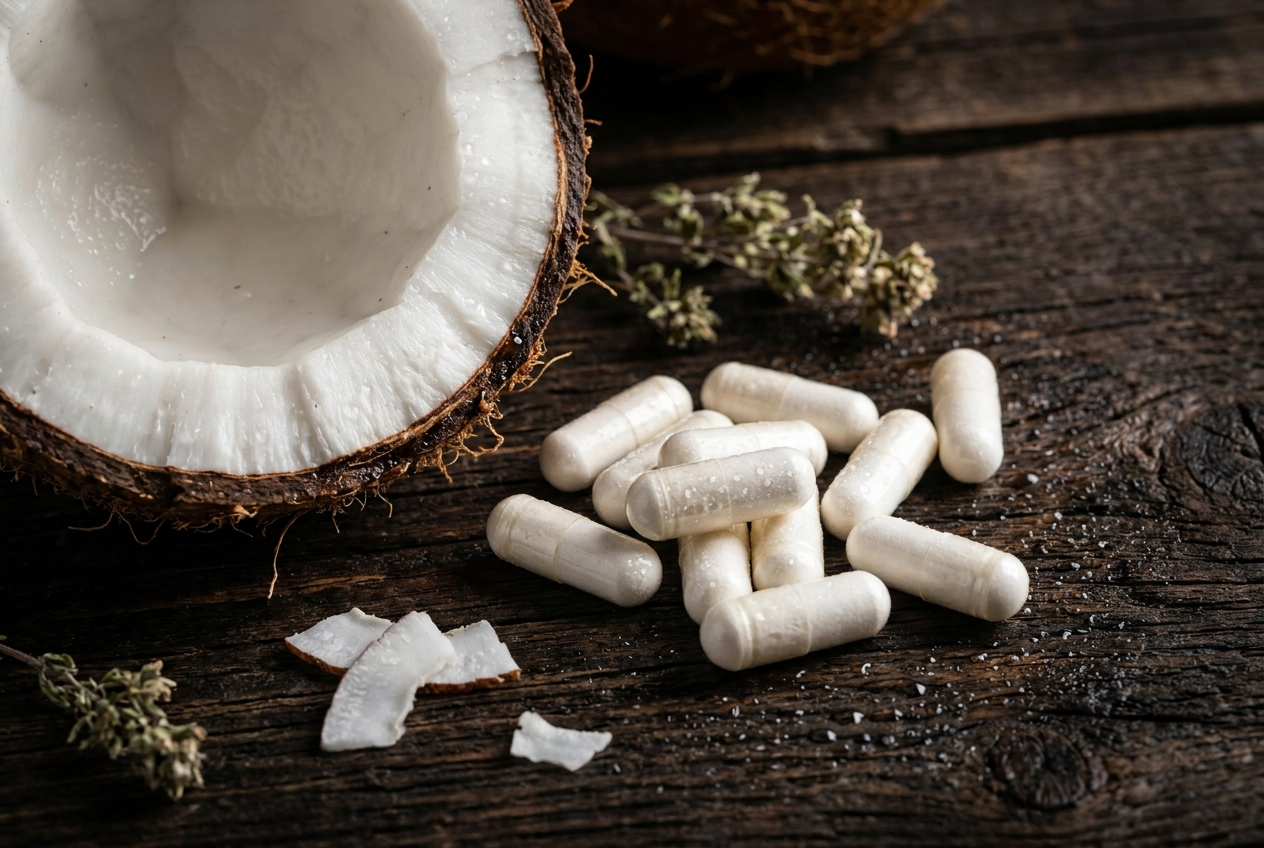
Supporting the body requires interventions that target specific viral mechanisms without disrupting natural physiological processes. Monolaurin is a unique monoester formed from lauric acid, a medium-chain fatty acid natively found in human breast milk and coconut oil. It interacts directly with the physical structure of certain microorganisms. Many pathogens, including the herpes simplex virus, are encased in a protective lipid bilayer. This lipid envelope is essential for the virus to attach to, penetrate, and infect host cells. Monolaurin integrates itself into this lipid membrane, disrupting its highly organized structural integrity. Research published in the Journal of Fish Diseases demonstrates that lauric acid and glycerol monolaurate exert potent antiviral activity against cyprinid herpesvirus 2, a herpesvirus of carp, by physically disrupting the viral envelope structure, altering its physicochemical properties, and compromising virion stability. This structural disruption strategy works synergistically with amino acid management. A foundational guide outlining the best supplements for herpes outbreaks details how combining these interventions fundamentally alters the viral environment. While L-lysine competes with arginine to deprive the virus of necessary building blocks, monolaurin systematically degrades the viral envelope. A 2017 review in Integrative Medicine notes that L-lysine supplementation at doses exceeding 3g per day, when combined with a low-arginine diet, appears to improve the subjective experience of herpes simplex lesions.
Frequently Asked Questions
Does stress cause herpes outbreaks?
Yes. Psychological and physical stress directly elevate systemic cortisol levels. High cortisol aggressively suppresses the lymphocytes and immune cells that typically keep the herpes simplex virus dormant inside sensory nerve ganglia. This immune paralysis allows the virus to reactivate, travel to the skin surface, and trigger a symptomatic outbreak.How does combining monolaurin with lysine help?
These two compounds target the virus through separate, complementary biological pathways. L-lysine competes with arginine absorption, depriving the virus of the specific amino acid materials it requires to replicate. Simultaneously, monolaurin physically interacts with the virus itself, destabilizing its protective lipid envelope to neutralize its ability to bind to and infect healthy host cells.What is the best monolaurin dosage for herpes support?
The optimal monolaurin dosage varies based on individual immune needs and the specific phase of viral activity. General protocols often suggest beginning with a smaller dose to assess physiological tolerance, followed by a gradual increase during periods of acute stress or active viral replication. Consistent daily use is well-researched for maintaining long-term immune resilience. When building your routine, prioritize quality by evaluating options directly at Shop Monolaurin.
Can monolaurin replace antiviral drugs for herpes?
Monolaurin is a dietary supplement designed to support overall immune balance and microbial defense; it is not a pharmaceutical medication. It does not cure or treat viral infections. While many individuals integrate monolaurin into their daily routine as a natural complementary tool alongside conventional protocols, it is not a direct substitute for prescribed antiviral therapies like valacyclovir or acyclovir.Summary
Maintaining immune balance during periods of elevated stress requires highly specific, biological interventions rather than generalized wellness routines. The physiological reality of stress involves high cortisol, depressed cellular defense, and an ideal environment for viral reactivation. By strategically deploying L-lysine to starve viral replication, and utilizing monolaurin to structurally degrade the lipid envelopes of reactivating pathogens, individuals can proactively support their body’s natural resilience.Continue Exploring
- Best Supplements for Herpes Outbreaks: A Routine Guide
- The Science Behind Natural Alternatives That May Help With Herpes Outbreaks
References
- Journal of Virology. “Non-neuronal sites of latency for alphaherpesviruses.” (2026). https://doi.org/10.1128/jvi.01723-25
- Journal of Fish Diseases. “Potent Inhibitory Effects of Lauric Acid and Glycerol Monolaurate Against CyHV-2 and the Viral Envelope.” (2026). https://doi.org/10.1111/jfd.70129
- Integrative Medicine. “Lysine for Herpes Simplex Prophylaxis: A Review of the Evidence.” (2017). https://pubmed.ncbi.nlm.nih.gov/30881246/
- Best Supplements for Herpes Outbreaks: A Routine Guide. https://monolaurinsupplement.com/best-supplements-for-herpes-outbreaks-a-routine-guide
- The Science Behind Natural Alternatives That May Help With Herpes Outbreaks. https://monolaurinherpes.com/the-science-behind-natural-alternatives-that-may-help-with-herpes-outbreaks